
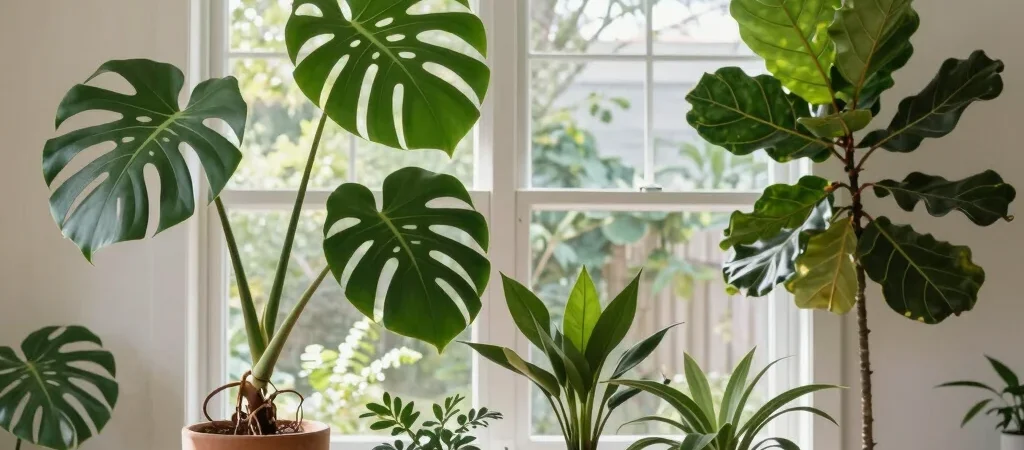
When a plant tag advises bright indirect light, it rarely accounts for the low-emissivity glass, neighboring brick walls, or deep window overhangs of city apartment buildings. Most plant parents mistake a generally bright room for adequate photo exposure, leaving sun-loving foliage to starve slowly across the coffee table.
Decoding Window Orientations and Light Falloff
South-facing windows offer intense direct rays that can scorch delicate calatheas but make ficus species thrive when set back two feet. North-facing apertures provide consistent, cool illumination that suits velvet-leafed philodendrons, though light levels drop dramatically just three feet inside the threshold.
To measure true exposure without expensive light meters, observe the shadow cast by a sheet of paper at noon. A sharp, distinct shadow indicates direct light, while a soft-edged, blurry shadow signals the ideal zone for indirect daylight lovers.
Positioning Foliage for Seasonal Shifts
Light changes dramatically between summer and winter as the sun trajectory lowers across the horizon. Moving your potted collection closer to glass frames in November compensates for shortened daylight hours without risking leaf burn.
Remember to rotate your pots a quarter-turn during weekly waterings. This prevents lopsided growth stems and ensures every side of the canopy receives equal energy.